

The full system · 46 pages · Instant PDF
Know what to say after they answer.
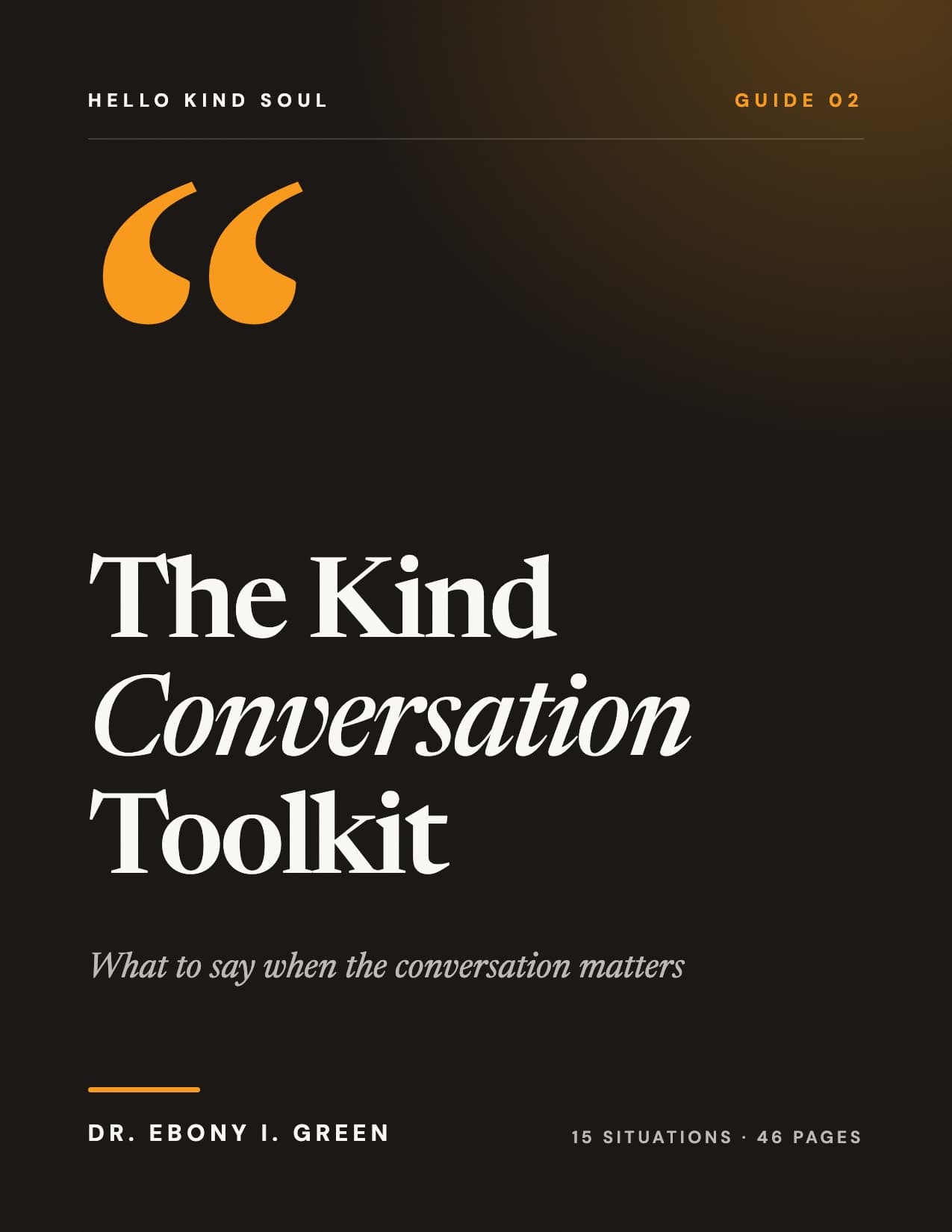
Starting a hard conversation is one skill. Staying in it is another. The Toolkit gives you both: six questions before you speak, fifteen real situations, and what to do in each of the three ways they usually go.
$2946 pages · PDF · By Dr. Ebony I. Green
Where it usually goes wrong
There's a third move, and it can be learned.
They get defensive. They cry. They say that's not what happened. They agree with everything and change nothing.
And the line you rehearsed in the car is suddenly useless.
Most people fall back on the only two moves anyone taught them: retreat or escalate.
What's inside
Four parts, one system.
Before you speak
Six questions that catch a conversation before it goes wrong. Four minutes once you know them.
Having the conversation
Fifteen situations. How to open, the three ways it usually goes, what to say in each, and how to close so it doesn't reopen next Tuesday.
Quick reference
Every opening line in one place. The page you open in the parking lot.
Practice
Eight worksheets to print and write on, from a steadiness check to a repair planner for when you were the one who got it wrong.
The fifteen situations
Boundaries and limits
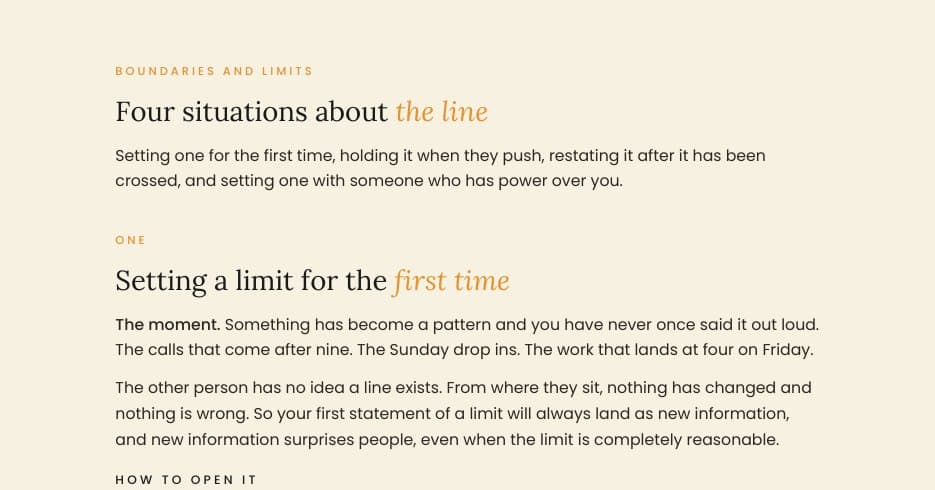
- Setting a limit for the first time
- Holding a limit when they push back
- Restating a limit after it's crossed again
- Setting a limit with someone who has power over you
Conflict and repair
- The same fight you keep having
- Repairing with someone you can't walk away from
- Responding when they get defensive
- Ending a conversation that's going in circles
Saying the hard thing
- Giving difficult feedback
- Saying no and meaning it
- Disagreeing without it becoming a fight
- Correcting someone without shaming them
Being understood
- Asking clearly for what you need
- Addressing something that hurt you
- When you each remember it differently
Plus a note on conflict with your child.
Look inside
Here's how a situation works.
Each of the fifteen situations starts with the moment you're in and why it's hard, then gives you the words to open. Next come the three ways it usually goes, with what to say in each, and last, how to close it so it doesn't reopen next week.
“You are responsible for what you say and for how you respond. You are not responsible for how they take it.”
Who it's for
Conversations between equals.
Partners, parents, adult children, friends, coworkers, and the person who manages you. Setting a limit with your mother and with your manager is the same skill in two rooms.

Who wrote it
Written by Dr. Ebony Green.
Dr. Ebony Green, Ed.D., has spent more than 25 years working with teams, schools and families on the conversations people avoid. Organizations pay her for this work. This guide is her bringing it home.
"Kindness isn't about being soft. It's about being honest in a way that protects the relationship while telling the truth."
How it works
Get the PDF instantly, on screen and by email.
Answer the six questions before you speak.
Find your situation, read the three ways it can go, then have the conversation.
Questions
Before you start.
How do I get it?
The download opens on the next screen after you pay, and a copy goes to your email.
Is this therapy?
No. It's a communication guide, and it has a page on when a conversation is not enough and who to call instead.
I already have the 5 Scripts. Is this the same?
The Toolkit picks up where the scripts stop. The scripts give you the opening. The Toolkit covers the second move: what to say after they answer.
Can I print it?
Yes. The eight worksheets are made for it.